Every week I talk to someone who's already decided they want to buy in Panama before they've asked the more useful question first: should they, right now, given where they are in this process?
So before we get into how buying actually works here, I want to be upfront about something most real estate content won't tell you — buying isn't automatically the right next step just because you love Panama. Sometimes renting for a year is the smarter move. I'll get to that.
But if you've done that thinking already, or you're far enough along to want the real mechanics, this is the roadmap. Not a brochure. The actual process, the actual risks, and what I'd tell a friend before they signed anything.
Can Foreigners Actually Buy Property in Panama?
Yes. Foreigners can own titled property in Panama with essentially the same rights as Panamanian citizens — no requirement to form a local company, partner with a citizen, or hold residency first, for the vast majority of residential purchases. This is genuinely more open than most Latin American countries, and it's one of the real reasons Panama attracts as many foreign buyers as it does.
That said, “foreigners can buy property” isn't the whole answer, and treating it as one is exactly how people get into trouble. Not every property in Panama comes with the same kind of ownership — some land is titled, some exists under Rights of Possession, and some sits on government-owned coastal land available only through a concession. Certain border and island areas also carry additional restrictions that don't apply elsewhere.
None of this means foreign ownership is complicated in general. It means the specific property you're looking at needs to be verified before you assume anything about what you'd actually be buying. That verification is a job for a qualified Panamanian attorney, not a blog post, and I'll say that more than once in this guide because it matters more than once.
Buying for Lifestyle vs. Buying as an Investment
This sounds obvious written down, but I watch people skip it constantly: buying a place to live in and buying a property as an investment are two different decisions, and they should lead you toward different properties.
- A primary residence is about daily life — walkability, proximity to healthcare, neighborhood fit, and how the space actually functions for you.
- A part-year vacation property adds two more questions: how easily it generates rental income while you're away, and what maintaining an empty property actually involves.
- A pure investment purchase makes your own preferences almost irrelevant — what matters is what tenants or future buyers want, which isn't always what you'd want for yourself.
- A purchase tied to a residency goal carries another layer of requirements worth confirming with an immigration attorney before you shop, not after.
Get honest with yourself about which of these you're actually doing before you start touring properties. A lot of buyer's remorse in Panama traces back to someone shopping for a lifestyle property while thinking like an investor, or the reverse.
Should You Buy Right Away, or Rent First?
I'll give you a straight answer instead of a non-answer: it depends on how well you actually know Panama, not on how much you've researched it online.
Buying soon after arriving can make sense if you already know the country well — repeat visits, extended stays, or real time spent in the specific area you're considering — and you have a clear, specific reason for the property you've found. If you've found the right place and you understand the trade-offs of that neighborhood or town, waiting a year for the sake of waiting doesn't necessarily help you.
Renting first is usually the better call if you've never actually lived in Panama, you're not sure which area suits you, or you're still working out whether Panama itself is the right move. A place that looks perfect during a scouting trip can feel different once the daily reality sets in — the actual commute, the actual grocery run, the actual neighborhood at 9pm on a Tuesday.
Choosing Where and What to Buy
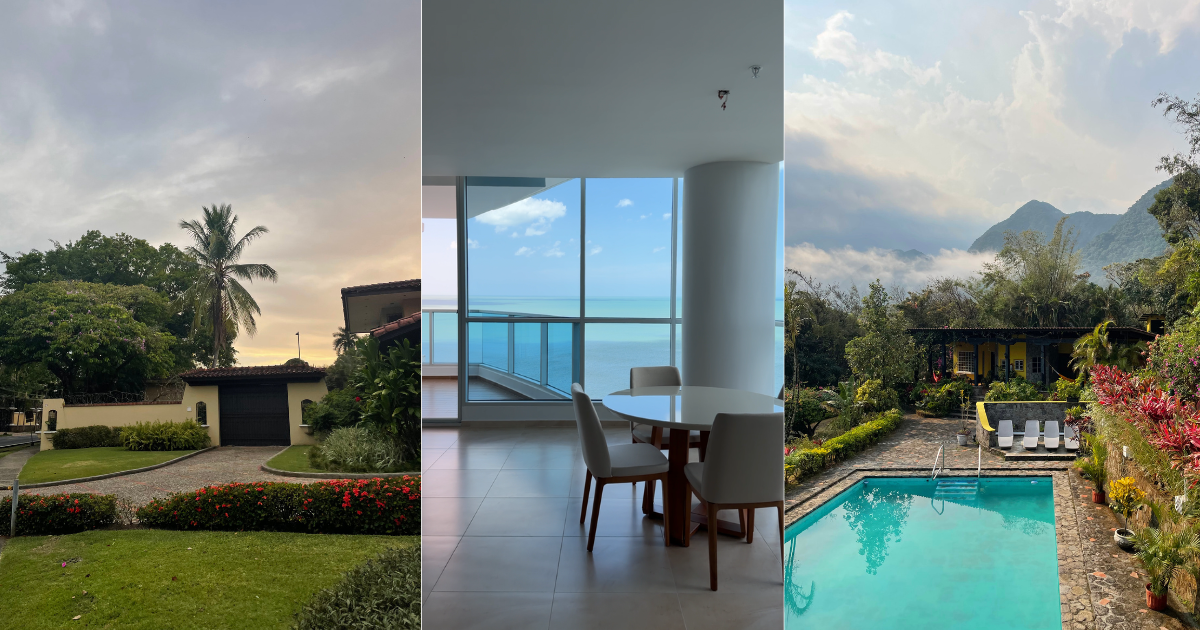
Location should follow from how you intend to use the property, not from whatever listing caught your eye first. If you haven't already, our guides below walk through what daily life actually looks like in each area — not just what it costs — and they're worth reading before you start touring properties.
Property types worth understanding at a high level:
- Apartments and condos — the most common purchase for foreigners, almost always titled property, which keeps financing and resale relatively straightforward.
- Houses — they vary enormously by region and come with their own maintenance responsibilities.
- Beachfront property — meaningfully more ownership complexity than other categories. I'd encourage real caution and real due diligence here specifically, since coastal zone regulations affect a lot of what looks like straightforward beachfront listing.
- Land — the widest range of ownership types, and generally the most careful title verification.
- New construction vs. resale — genuinely different processes and risks, covered further down.
Understanding What You're Actually Buying
I won't turn this into a full legal breakdown, but you need the basics before you go further.
| Ownership type | What it actually means |
|---|---|
| Titled property | Registered with Panama's Public Registry under a specific finca (property) number, with defined boundaries. The closest equivalent to ownership as most foreigners understand it — generally the most secure and most common choice for foreign buyers. |
| Rights of Possession | Land that hasn't been formally titled. It can be bought and sold, but carries less legal certainty and can be harder to finance. |
| Concession | Most relevant on the coast. The land itself remains government-owned; what you're buying are development rights for a defined term. |
| Condominium ownership | Common with apartments. Comes with its own layer of rules through the building's property regime — HOA obligations, bylaws, and shared-space rights. |
The Buying Process, Step by Step
Here's roughly how a purchase moves from idea to keys in hand, though the exact order and pacing shift depending on the property and whether you're financing.
- Establish your budget and goals. Before you look at a single listing, get clear on your actual number, whether you're paying cash or financing, and what you're trying to accomplish.
- Choose your area. Narrow down where you're actually looking, ideally after spending real time there rather than relying on photos and listings.
- View properties. In person, ideally more than once, at different times of day — traffic, noise, and light change a property's feel more than people expect.
- Make an offer. Once you've found the right property, your offer typically opens negotiation on price and terms.
- Negotiate terms. Price, timeline, what's included (furnishings, appliances), and any conditions get worked out here.
- Get an attorney involved, if you haven't already. This should happen before you sign anything binding, not after.
- Sign a Promise to Purchase (Promesa de Compraventa) or purchase agreement. This formalizes the deal and typically involves some form of deposit — structures vary by transaction, so I won't quote a percentage as if it's standardized, because it isn't.
- Due diligence. Your attorney verifies the title, ownership, and everything else covered in the next section. This is the stage where problems need to surface.
- Closing. Final documents are signed, funds are transferred, and the transaction is completed, typically before a notary.
- Title transfer and registration. The property is formally registered in your name with the Public Registry.
- Taking possession. You get the keys — depending on the agreement, at closing or shortly after.
Timelines vary a lot depending on the property, whether financing is involved, and how quickly documentation comes together, so I won't give you a fixed number of weeks here. Ask your attorney for a realistic estimate specific to your transaction.
Due Diligence: The Part That Actually Protects You
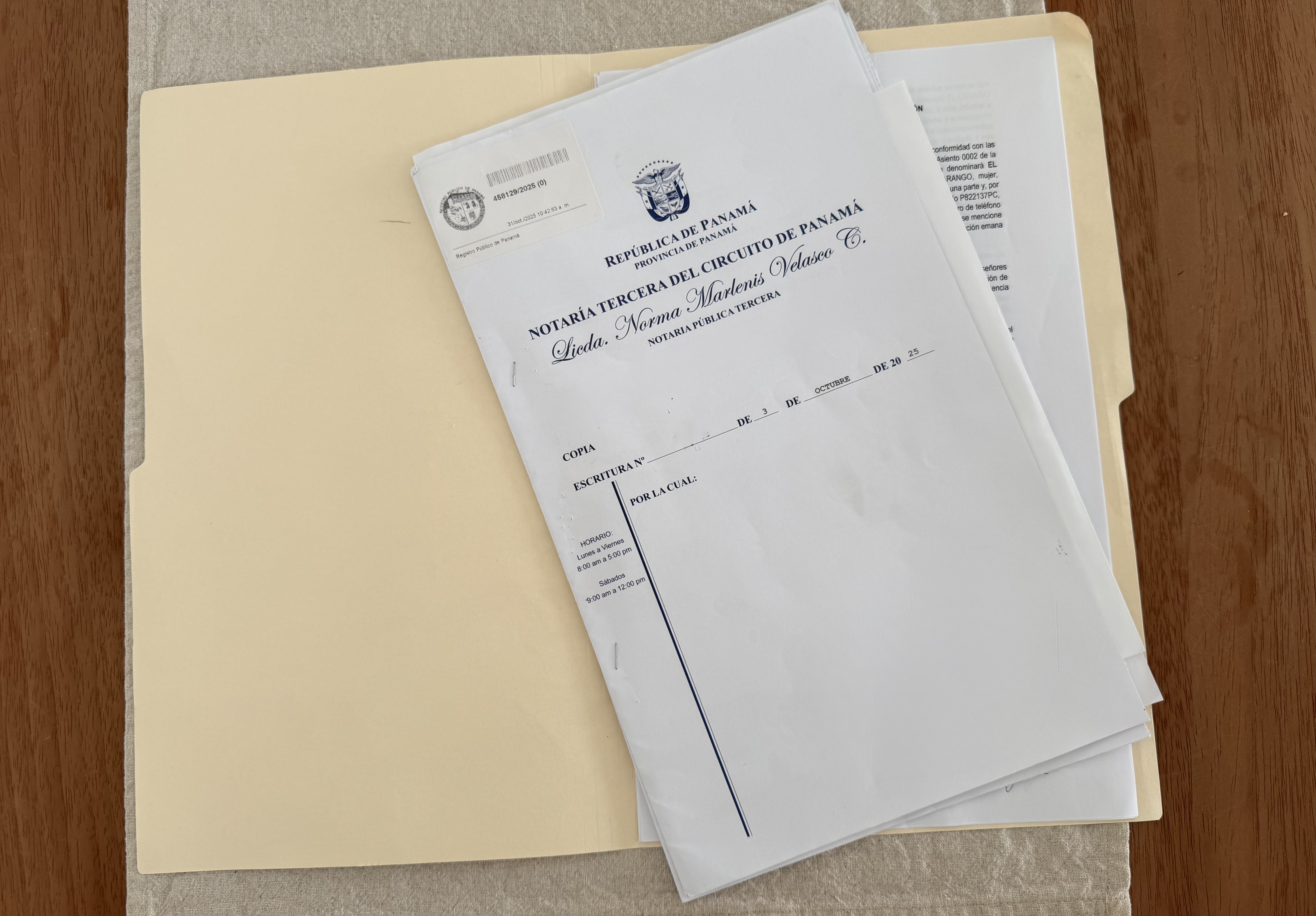
This is worth taking seriously, and it's worth paying for. Use an independent Panamanian attorney — independent meaning someone representing you, not someone recommended by the seller or working both sides of the deal.
Depending on the property, a thorough due diligence review typically confirms:
- The legal owner, and whether they have the authority to sell.
- Title status and registration under the Public Registry.
- Any liens or encumbrances that would transfer with the property.
- Whether property taxes are current.
- HOA or condominium fee status and any outstanding building assessments.
- Permits for any existing construction or additions.
- A current survey confirming boundaries match what's being sold.
- Zoning compliance for your intended use.
- Any outstanding debts tied to the property.
- The structure of the selling entity, if the property is held by a corporation.
- The specific terms of the purchase contract itself.
Financing vs. Paying Cash
Paying cash is simpler and faster, and it removes financing contingencies from your negotiating position entirely. Financing is genuinely available to foreign buyers through several Panamanian banks, but expect a different process than you're used to at home — more documentation, different timelines, and terms that shift based on your income profile, the bank, and current lending conditions.
Foreign borrowers typically see somewhat higher interest rates than Panamanian residents get, and down payment requirements tend to be higher for non-residents as well.
New Construction vs. Resale
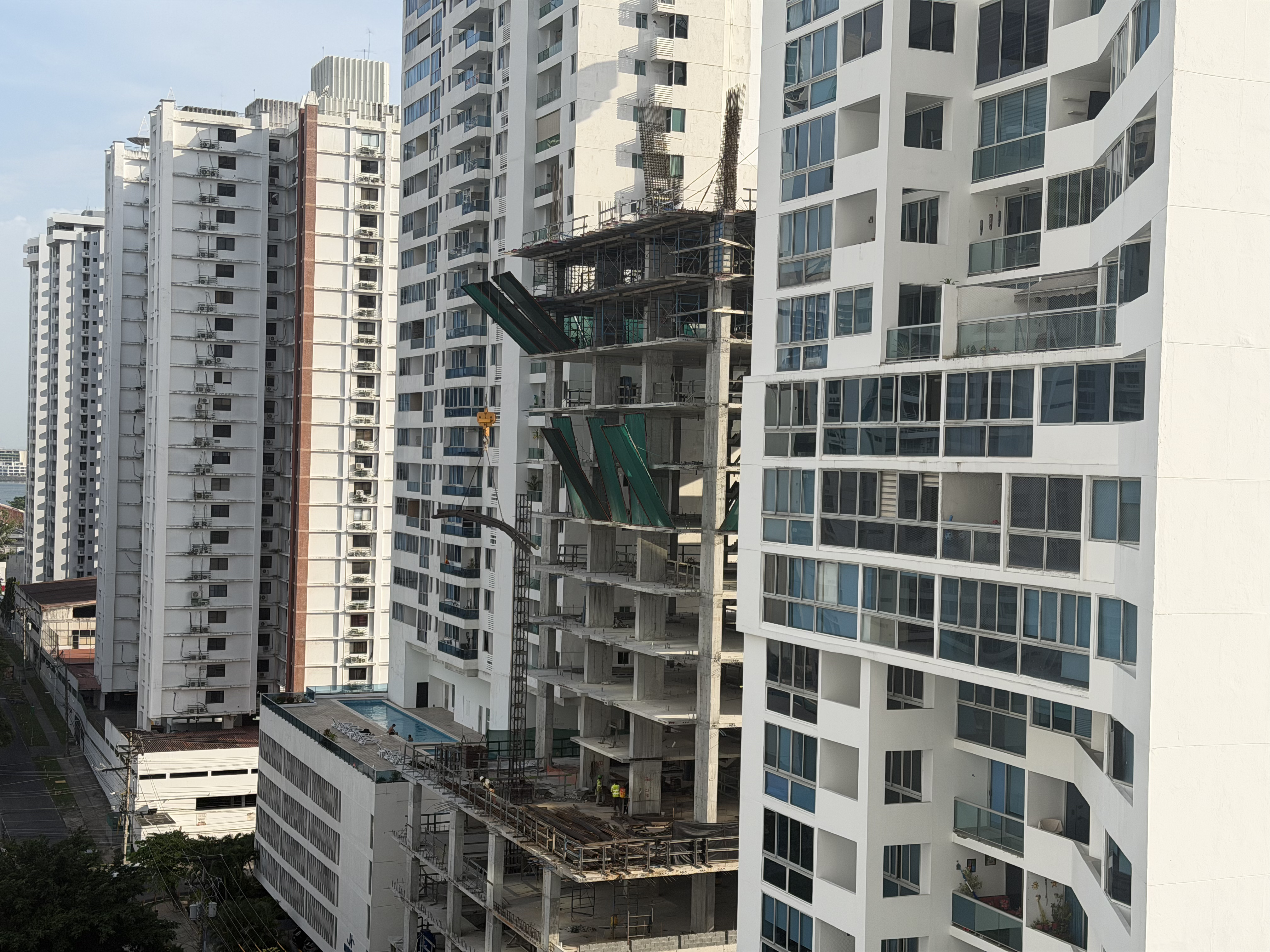
Pre-construction and new development purchases involve their own rhythm: typically a reservation deposit, then a payment schedule tied to construction milestones, an expected delivery date that should be treated as an estimate rather than a guarantee, and a contract that spells out exactly what's included — finishes, appliances, parking, storage. The developer's track record matters enormously here; ask about their previous projects, whether they delivered on time, and what buyers from those projects actually experienced. Delays happen more often than buyers expect, and a final walk-through inspection before closing is your chance to flag anything that doesn't match the contract.
Resale properties come with a different set of questions: the property's actual current condition, an independent inspection, full title and due diligence review as outlined above, what furnishings or fixtures are included if any, and the building's HOA history if it's a condo — special assessments, reserve fund health, and any disputes are all worth asking about before you fall in love with the view.
Neither path is inherently better. New construction gives you modern finishes and warranty coverage but carries delivery-timeline risk. Resale gives you a known, inspectable product but may need updating and comes with whatever history the building or property carries.
Additional Costs Beyond the Purchase Price
The sale price is not your total cost, and budgeting as if it is causes real problems at closing.
| Cost | What to expect (as of 2026) |
|---|---|
| Buyer-side closing costs (cash purchase) | Typically 2% to 5% of the purchase price |
| Legal fees | Commonly around 1% to 1.5% |
| Notary and Public Registry inscription fees | Included within that closing-cost range |
| Financed purchases | Tend to land toward the higher end, due to bank processing costs |
| Property transfer tax (ITBI), 2% | Customarily paid by the seller — a market convention, not a fixed legal requirement |
Because the ITBI convention can be negotiated, confirm who's covering it in your specific deal. Beyond closing, factor in ongoing costs: HOA fees if you're buying a condo, property insurance, and eventual furnishing or renovation costs if the property needs them. None of these are unique to Panama, but they're easy to underestimate when you're focused on the headline purchase price.
Property Taxes and HOA Fees
Panama's annual property tax system tends to surprise North American buyers, usually in a good way. Properties registered as a primary residence benefit from a full exemption on the first $120,000 of registered value, with progressive rates above that.
| Registered value (primary residence) | Annual rate |
|---|---|
| Up to $120,000 | Exempt — often no annual property tax at all |
| $120,001 – $250,000 | Generally 0.5% |
| Above $250,000 | Generally 0.7% |
These figures should be confirmed against current DGI rates for your specific property, since rates and thresholds can be adjusted. New construction may also qualify for additional temporary exemptions depending on when it was built.
Rental and Investment Considerations
If part of your plan involves renting the property out, confirm what's actually permitted before you buy, not after. Long-term rental is broadly straightforward for most titled residential property. Short-term rental, including platforms like Airbnb, is a different story — building HOA rules, municipal regulations, and the property type itself can all restrict or outright prohibit short-term rentals, and this varies building by building and town by town.
Buying Property Does Not Automatically Grant Residency
This is worth stating plainly because the confusion comes up constantly: purchasing property in Panama and obtaining Panamanian residency are separate legal matters. Certain residency categories do involve a qualifying real estate investment as one path among several, but simply owning property does not by itself confer residency status. If residency is part of your goal, that requires its own process through an immigration attorney, with its own requirements that are worth confirming directly rather than assuming from something you read about property purchases.
Common Mistakes Foreign Buyers Make
The patterns repeat more than you'd think.
- Falling in love with a specific property before understanding the area it's in — and then justifying the neighborhood because the apartment was perfect.
- Assuming the buying process works the way it does back home, down to details like escrow, disclosure requirements, or standard timelines that simply don't map onto Panama's system.
- Skipping independent legal representation, or using an attorney recommended by the seller rather than someone working purely for you.
- Not fully understanding the ownership structure of a specific property before making an offer on it.
- Assuming short-term rental income is automatically available without checking building or municipal rules.
- Focusing entirely on purchase price while ignoring closing costs, HOA fees, and property tax status.
- Buying an investment property based on optimistic rental assumptions rather than realistic local demand.
- Buying before ever having spent meaningful time actually living in the area, only to realize afterward that the daily reality didn't match the vacation impression.
What's Your Next Step?
Where you go from here depends on where you actually are in this process. If you're still narrowing down where in Panama fits your life, a relocation planning conversation or scouting visit — the kind that walks you through neighborhoods, housing, and daily logistics rather than just sightseeing — is usually the right next move before you're anywhere near an offer.
If you already know where you want to buy and you're ready to start looking seriously at the market, that's a different conversation: understanding realistic pricing, identifying properties that actually match what you're after, and having someone in your corner through the process rather than navigating it solo.